Put the Money Back in Classrooms Eastern Cape Schools
The 2025 matric results were announced on 13 January 2026, and the class of 2025 has been rightly celebrated for its record national pass rate. Nationally, the Class of 2025 achieved a historic result. But the Eastern Cape remains at the bottom of the provincial table with a pass rate of 84.17%, the lowest of all nine provinces. It also signalled a slight drop from the 2024 results, which saw an 84.98% pass rate. Eastern Cape MEC for Education has ascribed the drop in the pass rate to the suspension of nearly 30 educators for alleged sexual offences and the misuse of school funds. It is not clear what impact the suspension may have had in real terms, but blaming the pass rate on the absence of 30 educators, masks the fact that a myriad of other systemic problems may be contributing to the educational failures in the province. Perhaps the most devastating to schools, is the fact that the Eastern Cape Department of Education (ECDOE) has, since 2020, been persistently underfunding schools in the province. When you do not give schools enough money to provide a quality education to its learners, the roosters eventually come home to roost.
The funding of public schools in South Africa, is determined by the National Norms and Standards for School Funding (NNSSF). In terms of the NNSSF, the Minister of Basic Education must determine the per-learner allocation every year. This figure represents how much money each learner is meant to receive for their education per year, regardless of which province they are in. A school’s total budget is then calculated by multiplying this per-learner amount by the number of learners enrolled at that school. The money is not optional or flexible funding; it is meant to cover essential, day-to-day costs such as textbooks and stationery, water and electricity, building maintenance, and basic hygiene supplies like toilet paper and cleaning products.
While most other provincial education departments allocate the correct amount to the learners, the ECDOE have since 2020, deviated from this amount. For example, in the 2021/2022 financial year, no-fee schools nationally were meant to receive R1 455 per learner, but Eastern Cape schools received only R766, which is just over 53% of what was required. In 2022/2023, the national target rose to R1 536 per learner, yet Eastern Cape schools received only R815. The pattern continued into the 2023/2024 and 2024/2025 financial years. During these years, the ECDOE simply decided to retain 33.75% of the per-learner allocation for so-called “Provincial NNSSF Budget”. This resulted in schools only receiving 66.25% of their budgets. There is no legal basis for the ECDOE’s decision to retain the per-learner allocation and in litigation about this issue in the Eastern Cape High Court, Makhanda, the ECDOE has been unable to account for the retained amounts. In other words, the ECDOE withheld money from schools that were meant to fund basic educational resources, without being able to explain how the money was used by the department, and how that benefitted the learners.
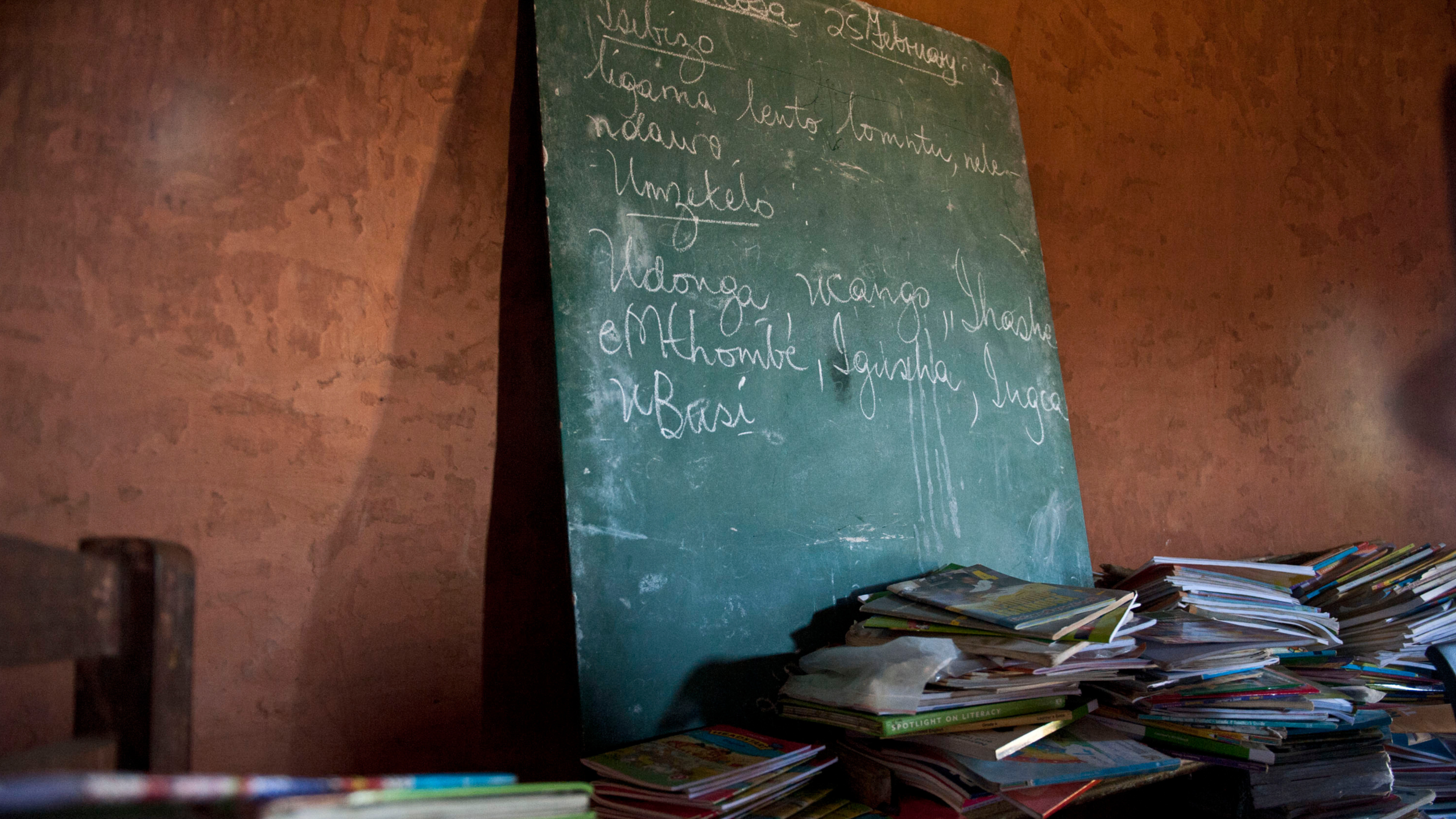
It is therefore not surprising that Eastern Cape schools are struggling. No-fee paying schools that are entirely dependent on government funding rely on this money to pay electricity or water bills, textbooks and stationery, toilet paper and cleaning products, without which education is not possible. In recent years, the gap between what schools were meant to receive and what they got has been huge. This leaves principals and school governing bodies scrambling to keep the school open. Teachers often spend their own money on photocopying class materials and buying stationery for themselves and the learners. Learners sit for lessons with few or no textbooks. Schools fall into arrears on municipal accounts and face threats of water or electricity disconnection. Parents, many of whom are unemployed or living on very little, are asked to “fundraise” or to bring supplies that the state should provide.
The LRC has noted reports of parents being asked to provide stationery, paper, and toilet paper to the schools at the start of the school year. While we agree that this burden should not fall on parents, many schools, especially in the Eastern Cape are desperate. They are not asking parents to provide these resources because they are greedy, but because they will not be in a position to educate the learners without it. Teachers in the Eastern Cape do wonderful and resilient work, often under difficult circumstances. But years of underfunding are starting to take its toll.
In 2023, the LRC, on behalf of the Makhanda Circle of Unity and three schools in Makhanda launched litigation to address the chronic underfunding of schools in the province. The case is set down to be heard on 12 March 2026 in the Makhanda High Court. If successful, it will put an end to years of underfunding and see schools being reimbursed for the years that the ECDOE unlawfully retained their per-learner allocations. This will be a significant step towards creating better resourced schools that no longer have to rely on poor rural households to have enough copying paper so that learners can finalise tasks.
It is imperative that the national Department of Basic Education and the ECDOE must ensure that the NNSSF are properly implemented so that learners in the Eastern Cape get what they are legally owed. Until the money meant for classrooms is put back into classrooms, the Eastern Cape will forever lag behind.