Our Work
How We Work
We use the law as an instrument to realise human rights.
The LRC brings a breadth of experience and a deep knowledge to our work.
Over the last five decades, we have gained valuable experience in using strategic
litigation, legal reform, research, and advocacy to create positive and long-lasting change in the lives of our beneficiaries.
By providing free, expert, and compassionate legal services to individuals, we have provided many ordinary South Africans with the resources to stand up to injustice.
By working with our extensive network of civil society partners and allies, in the service of vulnerable individuals and communities in South Africa and other African nations, we have successfully created legal precedents and won judgments which have made a tangible impact in the lives of millions of people living in South Africa and beyond.
Our areas of focus have included legal reform of corporal punishment in South Africa, access to land, education, and health care, as well as advancing gender and racial equality and the rights of the disabled. We have also worked with partners and communities in other parts of Africa and the global South to support activists facing similar challenges.
In addition to this legacy work, we have identified land and education rights as key drivers of change in South Africa today. Our experienced and diverse team, working across South Africa, have committed themselves to helping landless people to gain access to land and ensure that our children have access to a quality basic education.
Ensuring the provision of scholar transport for qualifying learners in the Eastern Cape
The right to basic education obliges the state to provide learners with scholar transport where access to school would otherwise be hindered by their distance from their school and their family’s inability to pay for transport.
Since the start of the 2024 academic year, thousands of learners across the Eastern Cape Province who qualify for scholar transport were left stranded by the Eastern Cape Departments of Education and Transport. The LRC is currently representing the Khula Community Development Project and three affected schools, Mneketshe Junior Secondary School; SeaView Senior Secondary School; and Toyise Senior Secondary School, to obtain an urgent interdict compelling the ECDOE and ECDOT to process all outstanding scholar transport applications, ensure the immediate provision of scholar transport to learners who qualify for transport under the province’s scholar transport policy, and devise a plan to ensure that a similar failure does not occur at the start of the 2025 academic year.
This application, Khula Community Development Project and Others vs MEC for Education, Eastern Cape and Others, is another case in a series of matters that the LRC has been involved in to try and address shortcomings in the state’s provision of scholar transport.
“Denying scholar transport to learners is a direct violation of their right to education.
To uphold this right, the scholar transport system needs to work effectively, timeously
and be provided to every eligible child to ensure a safe journey to school.”
– Ona Xolo, LRC Attorney
Seeking clarity on land reform and redistribution in South Africa.
The South African Constitution makes provision for the redistribution of land, but there is currently no legislation that guides how land should be allocated for redistribution and, critically, to whom.
In Bezuidenhout and others vs the Minister for Agriculture, the LRC is representing three sheep farmers in the Beaufort West area, who have approached the court to compel the Minister for Agriculture, Land Reform and Rural Development to issue them with a 30-year lease in terms of the state’s redistribution programme. The applicants, who are the children of farm workers in the Beaufort West area, have been farming there since 2009, after accessing land through the state’s redistribution programme.
In 2019, they applied to the Department for a 30-year lease over the five farms, but to date their lease has not been issued. Despite initially being approved for the lease, the Chief Director: Western Cape Provincial Shared Services, decided in September 2020, not to award the lease to the applicants, after receiving unsubstantiated allegations that the applicants were being used as a “front” by the previous owner of the farms.
While the application seeks to review and set aside the decision not to award the lease to the applicants, they are also seeking systemic relief that will impact the way redistribution programmes are undertaken in South Africa.
To address the lack of a legal framework that currently exists, the applicants are also asking the court for declaratory relief to address the Department’s failure to create a transparent and consistent legal and policy framework for land redistribution in South Africa. The declaratory relief is supported by the East Cape Agricultural Research Project (ECARP), a non-profit organisation situated in Makhanda in the Eastern Cape.
“This declaratory relief will help other people in the same position as the applicants to better understand and navigate the Department’s redistribution programmes and will compel the Department to amend its processes to create a more transparent system.”
– Cecile van Schalkwyk, LRC Attorney
Advancing children’s rights through access to birth registration
In Cirangashane and Others vs the Minister of Home Affairs, the case concerns the right of every child born in South Africa to have their birth registered immediately or as soon as possible after they are born, no matter the status of their parents.
The South African Constitution entrenches the right of every child to a name and nationality from birth, a right which is met through the registration of their birth with the Department of Home Affairs. Without this a child’s Constitutional right to a name is denied, the risk of statelessness increases, and a child’s ability to obtain
education, health care, and social security is compromised. None of this is in the child’s best interests.
Despite the constitutional importance of birth registration, the current legal regime makes birth registration difficult for several reasons.
- The Department failing to implement the existing law to allow the registration of children where one parent is a citizen, permanent resident or refugee, but the other parent does not have a valid, unexpired passport, visa or permit
- The Regulations do not provide for the registration of a child where neither parent is a South African citizen, permanent resident or refugee, and one or both do not have a valid passport, visa or permit
- The Regulations do not provide for the late registration of children if neither parent is a South African citizen, permanent resident or refugee
- The Regulations do not provide for adults who were abandoned or orphaned, and do not have their parents’ documents, and were not registered as children, to register their own births
These exclusions contradict the Constitutional guarantee – supported by international law – that every child’s birth must be registered. It is the State’s obligation to facilitate registration, not to punish children for any mistakes by their parents.
Making early-grade literacy a national priority
The LRC is a co-founder of the Right to Read Campaign (#R2R), which aims to hold government accountable for doing everything practically possible to ensure learners can read for meaning by the age of 10.
The 2023 Progress in International Reading Literacy Study (PIRLS) results demonstrated that 81% of grade four learners in South Africa cannot read for meaning, in any language. The campaign’s focus is on legislative reform to ensure that the Minister enacts binding reading regulations as part of the right to a basic education. The regulations should clarify, at a minimum, the state’s obligations in relation to teaching time for reading, teacher training for reading, the provision of quality learner and teacher support materials for reading, and regular literacy testing. The potential impact of these regulations is far-reaching.
Importantly, the regulations will be a legal instrument for measuring the performance of the state in relation to reading levels, and to hold them accountable for doing everything practically possible to ensure learners can read for meaning by the age of 10. When implemented, the regulations should dramatically improve the lives of millions of school children.
“Not being able to read for meaning by the age of 10 is a gross violation of a school child’s Constitutional right to a basic education.”
– Cameron McConnachie, LRC Attorney
Why education?
The realisation of the right to basic education, as laid out in the South African Constitution, stands to benefit generations of South African children, and alter the trajectory of the future of the country.
Our work in this programme includes:

We have worked with government to draft regulations and develop policy, and engaged with public servants to improve mechanisms for faster delivery of educational materials, furniture, transport and infrastructure.
We have successfully litigated in an attempt to overcome resource and administrative obstructions in the provision of quality education.
We have advocated for legislative reform and changes to education policy.
We have advocated for legislative reform and changes to education policy.
We have worked with government to draft regulations and develop policy, and engaged with public servants to improve mechanisms for faster delivery of educational materials, furniture, transport and infrastructure.
We have successfully litigated in an attempt to overcome resource and administrative obstructions in the provision of quality education.
Education case study: The Madzodzo case
The Madzodzo case: helping to protect children’s right to a basic education
How we worked with parents, partners, and public officials to get 600 000 desks into schools in South Africa’s Eastern Cape province.
A 2011 government audit found that 1,300 of the Eastern Cape province’s 5,700 state schools lacked adequate furniture, affecting over 605,000 children.
“Many children were sitting on the floor, standing, or squeezing into desks shared with others, making basic reading and writing tasks virtually impossible,” explains attorney Cameron McConnachie, head of the LRC Education Programme.
In Madzodzo vs the Department of Basic Education (2014), the LRC took the South African Department of Education to court in three rounds of litigation, with the end result that the South African High Court declared the government’s failure to address the problem of a lack of desks and chairs in schools a violation of the Constitutional right to a basic education.
The High Court also ordered the government to deliver sufficient desks and chairs to all Eastern Cape schools by 31 May 2014.
“This case is significant because in the judgment the High Court affirmed the right to basic education, as distinct from other socio-economic rights in the South African Constitution, as ‘immediately realisable’. The judgment also stressed that the right to a basic education ‘requires the provision of a range of educational resources’, including desks and chairs, and is not merely a right to a place in a school. Lastly, the judgment set an important precedent by compelling the government accountable for the delivery of its constitutional obligation.”

Why land?
We use strategic litigation, research and law reform to protect communities’ rights to land and natural resources, strengthen accountable governance, and advance food sovereignty and climate justice so people can shape and sustain their own futures.
Our work in this area includes three focus areas:
Environmental and Climate Justice
We support communities to protect their land, livelihoods and ways of life from harmful development, including mining and extractive projects imposed without meaningful participation or consent. Our work recognises that land rights, cultural rights, and environmental protection are deeply connected, especially for communities whose spiritual and economic lives are tied to land and marine resources. Through a climate justice lens, we challenge decisions and policies that shift the costs of environmental harm and climate change onto communities already facing inequality and exclusion.
Food Security and Food Sovereignty
We work with small-scale fishers and farmers to protect their rights to produce, access and control their own food systems. This includes defending access to land, water and marine resources, and challenging laws and policies that threaten sustainable, community-based food production. Our focus is not only on food security, but on food sovereignty — ensuring communities have real power to determine how food is produced, shared and sustained in ways that are locally grounded, equitable and resilient.
Community Access to Land and Resources
We work to secure, protect and enforce communities’ rights to land and natural resources in both rural and urban contexts. This includes advancing equitable land redistribution and restitution, strengthening customary and communal land rights, and ensuring that governance structures such as traditional councils, CPAs, community trusts and municipalities are accountable and lawful. We also challenge unfair laws, practices and failures by the state that undermine people’s land tenure, dignity and ability to shape their own development.
Community Access to Land and Resources
We work to secure, protect and enforce communities’ rights to land and natural resources in both rural and urban contexts. This includes advancing equitable land redistribution and restitution, strengthening customary and communal land rights, and ensuring that governance structures such as traditional councils, CPAs, community trusts and municipalities are accountable and lawful. We also challenge unfair laws, practices and failures by the state that undermine people’s land tenure, dignity and ability to shape their own development.
Environmental and Climate Justice
We support communities to protect their land, livelihoods and ways of life from harmful development, including mining and extractive projects imposed without meaningful participation or consent. Our work recognises that land rights, cultural rights, and environmental protection are deeply connected, especially for communities whose spiritual and economic lives are tied to land and marine resources. Through a climate justice lens, we challenge decisions and policies that shift the costs of environmental harm and climate change onto communities already facing inequality and exclusion.
Food Security and Food Sovereignty
We work with small-scale fishers and farmers to protect their rights to produce, access and control their own food systems. This includes defending access to land, water and marine resources, and challenging laws and policies that threaten sustainable, community-based food production. Our focus is not only on food security, but on food sovereignty — ensuring communities have real power to determine how food is produced, shared and sustained in ways that are locally grounded, equitable and resilient.
Land case study: Tribal levies case
Challenging unjust tribal levies in South Africa
Why we are working to free 20 million of South Africa’s poorest people from the unconstitutional practice of tribal levies demanded by traditional authorities.
In many parts of South Africa people are being forced to pay levies and taxes to their traditional authorities. These taxes are often arbitrary, taking the form of an annual levy or a levy for a specific purpose, such as a chief’s new car or wedding. If people are unable to pay, they are punished: often by being refused proof of address letters that they need to get an identity document, open a bank account or access practically any service.
The LRC is challenging this outdated practice as clearly unconstitutional. In particular, we are representing community members from ten communities in the Limpopo province of South Africa.
“While the case is being brought in Limpopo, we have been approached by communities in Mpumalanga, North West, KZN and Eastern Cape about this practice,” says Wilmien Wicomb, LRC Attorney.
“If our clients are successful, we will ensure that about 20 million South Africans – often some of our poorest communities – are freed from this practice.”

Why legacy?
Our legacy work includes protecting and defending civil, political and socio-economic rights.
Our work in this area includes:
Openness and accountability
Access to justice and civil society support
Refugees, asylum seekers & migrant protections
Equality & non-discrimination
Equality & non-discrimination
Openness and accountability
Refugees, asylum seekers & migrant protections
Access to justice and civil society support
Legacy case study: Silicosis class action
South Africa’s largest class action case sees justice for those suffering from silicosis and TB
R320 million paid to 3 598 claimants in historicsilicosis class action case.
In 2013 a class action case was launched by the Legal Resources Centre in partnership with Abrahams Kiewitz Attorneys and Richard Spoor Attorneys (claimants attorneys) on behalf of mineworkers suffering from silicosis, a disease affecting the lungs.
The hearing of the silicosis class certification application was held from 12-23 October 2015 at the High Court in Johannesburg. Judgment in the certification application was delivered by the full bench on 13 May 2016, which set the scene for the largest class action in South Africa’s history.
The mining companies applied for leave to appeal in the Supreme Court of Appeal. The appeal was going to be heard in March 2018; however, prior to and after the May 2016 court hearing, various meetings were held between all the legal representatives to pursue the possibility of a settlement. This resulted in a settlement with six mining companies, which withdrew their appeals when the settlement agreement became final, with the high court approving the settlement as fair, adequate and in the interests of the class members.
In November 2019, the settlement resulted in the creation of the Tshiamiso Trust to facilitate payments to any employees who – between 12 March 1965
and 10 December 2019 – worked at any of the 82 gold mines listed in the settlement agreement and who had contracted silicosis or TB due to their work. These employees are potentially eligible for compensation.
On 7 April 2022, after one year of the Trust’s claims management system being in place, the Tshiamiso Trust stated that it had paid out claims amounting to more than R320 million to over 3 598 eligible claimants.

“We welcome this progress on behalf of the thousands of people who suffer from silicosis and TB due to their work and we renew our commitment to all potential silicosis claimants, says Sipesihle Mguga, LRC Attorney.
The remaining appeal
Only two mining companies – DRDGold Limited and ERPM – have appealed the class certification judgment after the settlement order. While the appeal
is moving forward, many silicosis claimants will have already lost their lives to their ailments. Should the appeal be dismissed, the LRC will need to decide
whether to continue with the trial on behalf of the class representatives who worked for these mining companies.This will take many years, and further silicosis claimants may pass away. Therefore, the greater importance remains in the argument for transmissibility of general damages so that the family members left behind will have a claim in the event that the subsequent trial is successful. The LRC has chosen to oppose the appeal and will argue an important aspect raised during the certification application: the development of the common law on transmissibility of general damages.
Why gender-based violence?
We use strategic litigation and law reform to strengthen protection for survivors, improve accountability where the law is poorly implemented, and ensure the justice system properly recognises the realities of abuse, including in cases involving self defence.
Our work in this area includes:
Battered Woman Syndrome
Sexual Corruption
Sexual Corruption
Our goal is to secure legal recognition of sexual corruption as corruption, or as a standalone offence, and to drive accountability by supporting better investigation and prosecution practices that protect survivors rather than treating them as complicit.
Battered Woman Syndrome
Our goal is to ensure courts properly recognise the realities of prolonged abuse by integrating battered woman syndrome and related expert evidence into how cases are decided and sentenced, so guilt, self defence and culpability are assessed with full context and fairness.
Sexual Corruption
Sexual corruption or sextortion is the exchange of entrusted public or institutional power for sexual favours.
Across South Africa, too many women and young people are forced into an impossible choice: submit to sexual demands or lose access to something they need. A job. A bursary. Housing. Water. A permit. This abuse of power, known as sexual corruption, is not simply misconduct. It is the exchange of entrusted public or institutional power for sexual favours. And it is happening in spaces where people are already vulnerable. It happens where NEED meets POWER.
As part of our gender-based violence work, the Legal Resources Centre has become increasingly concerned about the prevalence of sexual corruption. Research and community-based evidence show that young women between the ages of 18 and 24 are most at risk, followed closely by women aged 25 and 34. These are women trying to study, work, build families and survive in a difficult economy. Instead, many are confronted with gatekeepers who demand sex in exchange for access to basic opportunities and services.

Despite its widespread occurrence, sexual corruption is not explicitly criminalised under the Prevention and Combating of Corrupt Activities Act(PRECCA). This legal gap has serious consequences. Survivors may struggle to have their cases properly investigated or prosecuted. In some instances, they even face the risk of being treated as complicit rather than as victims of coercion. Silence, fear of retaliation, stigma and uncertainty in the law continue to shield perpetrators and deepen harm. We believe this must change.
Our work focuses on advancing the recognition of sexual corruption as a form of corruption, or as a standalone offence, under PRECCA. We are raising awareness through public engagements, research and dialogue so that communities understand what sexual corruption is and why it matters. Naming the harm is the first step toward ending it.
We are also engaging with the Sexual Offences and Community Affairs Unit within the National Prosecuting Authority in structured dialogue to address the practical challenges and opportunities in prosecuting sexual corruption. This includes examining how existing corruption and sexual offences frameworks are being used, where they fall short and what reform may be required to ensure accountability without prosecuting the survivors. By working toward legal recognition, accountability and institutional reform, we aim to ensure that survivors are protected, perpetrators are held accountable, and public power is exercised lawfully and ethically.
“At its core, this is a human rights issue. Sexual corruption violates dignity, equality and bodily autonomy. It exploits economic vulnerability and entrenches gender inequality. No one should have to trade their body for access to education, employment or basic services.”
– Sipesihle Mguga, GBV Programme Co-Lead
Women Who Kill Their Abuser
Women who kill or battered women syndrome refers to women who kill an intimate partner who has subjected them to prolonged abuse, often in circumstances shaped by trauma, fear, coercive control, and the failure of support systems to provide effective protection.
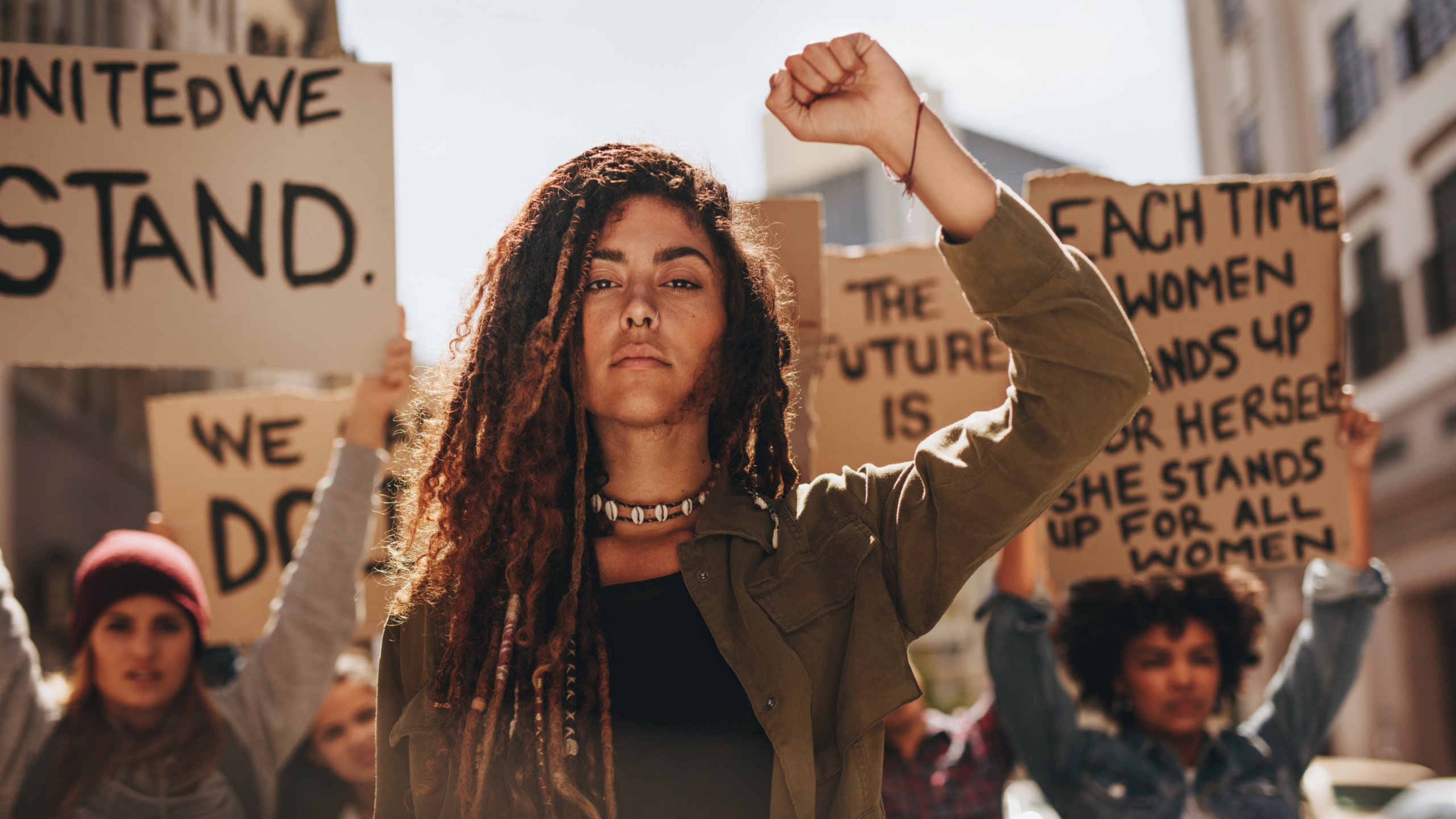
A concerning trend has emerged in South Africa: women who experience prolonged domestic abuse, and who have not been effectively protected by the system, sometimes kill their abusers as a last resort. When they are prosecuted, the history of abuse and institutional failure is too often sidelined in the assessment of guilt and sentence. In doing so, the legal system risks compounding that abuse rather than delivering justice.
Our work focuses on changing that. We want to advocate for the proper recognition and integration of Battered Woman Syndrome (BWS) as a critical factor in the adjudication of cases involving women who kill their abusers. This is not about creating a “special defence” or placing anyone above the law. It is about ensuring that courts fully understand the psychological, social and coercive realities of prolonged abuse when assessing intention, imminence, reasonableness and culpability.
In many of the cases we have encountered, the pattern is disturbingly similar. A woman reports repeated physical violence, threats, economic control and isolation. She may have sought help from family, community members, or even law enforcement often without meaningful protection. The abuse escalates. Eventually, in a moment shaped by fear, trauma, and a belief that there is no safe exit, she kills her abuser. When the matter reaches court, the focus narrows to the final act. The years of terror that preceded it fade into the background. This approach is legally and morally insufficient.
Battered Woman Syndrome, properly understood, assists courts in contextualizing a survivor’s state of mind. It explains why leaving is not always a realistic option, why danger is not confined to a single explosive moment, and why a threat can be perceived as imminent even if it does not fill neatly within traditional formulations of private defence. Without this context, courts risk applying legal tests in a vacuum, detached from the lived realities of gender-based violence.
Our aim is to develop jurisprudence that requires judicial officers to meaningfully engage with the history of abuse when adjudicating these matters. That includes the admission and careful consideration of expert evidence, a nuanced understanding of coercive control, and sentencing approaches that reflect diminished moral blameworthiness where prolonged abuse is proved.
At its core, this work is about fairness. The law must be capable of recognizing the difference between calculated violence and survival shaped by years of harm. A justice system committed to dignity, equality and substantive fairness cannot ignore the context in which these tragedies occur.