
Justice Catherine O’Regan receives the 5th George Bizos Human Rights Award
15 October 2026
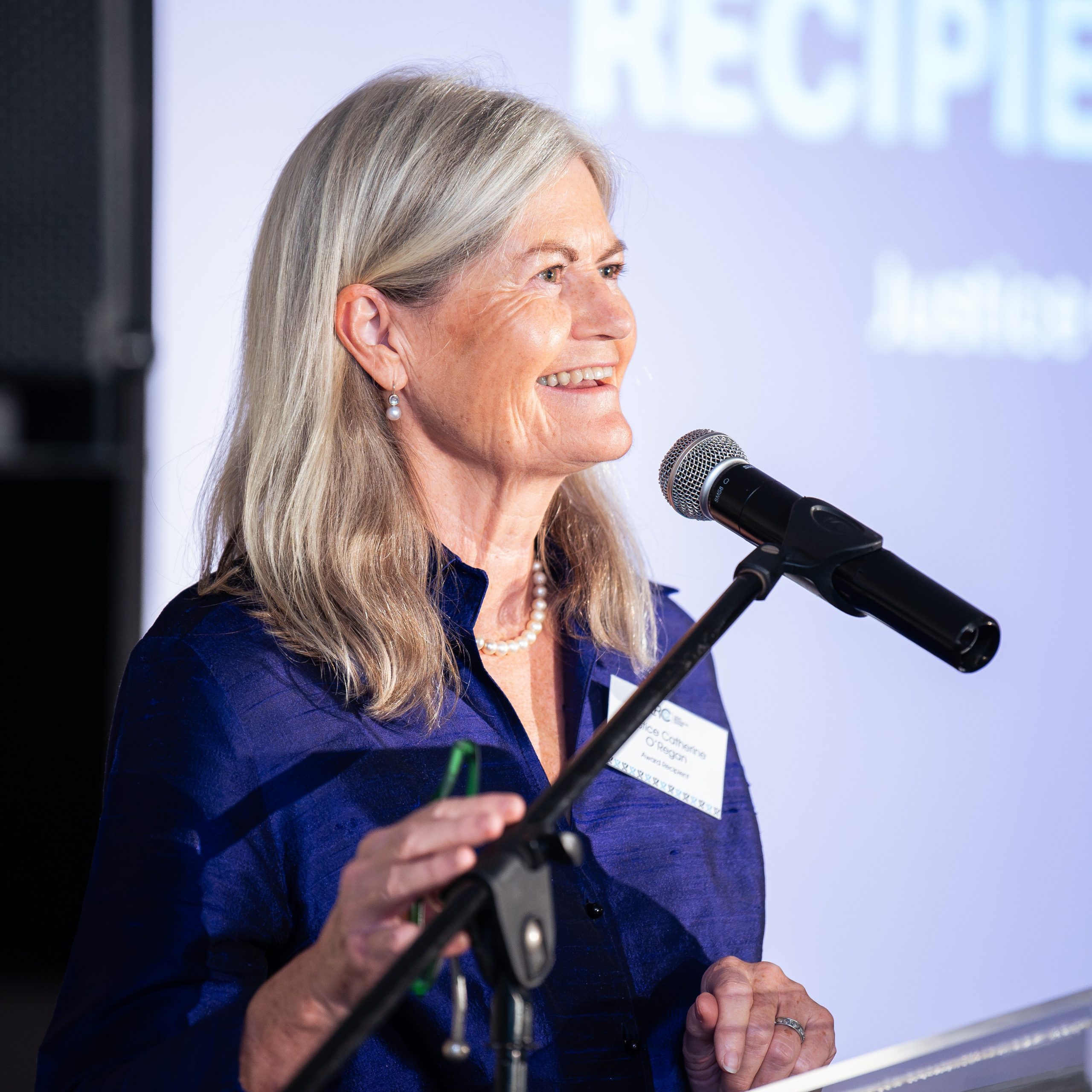
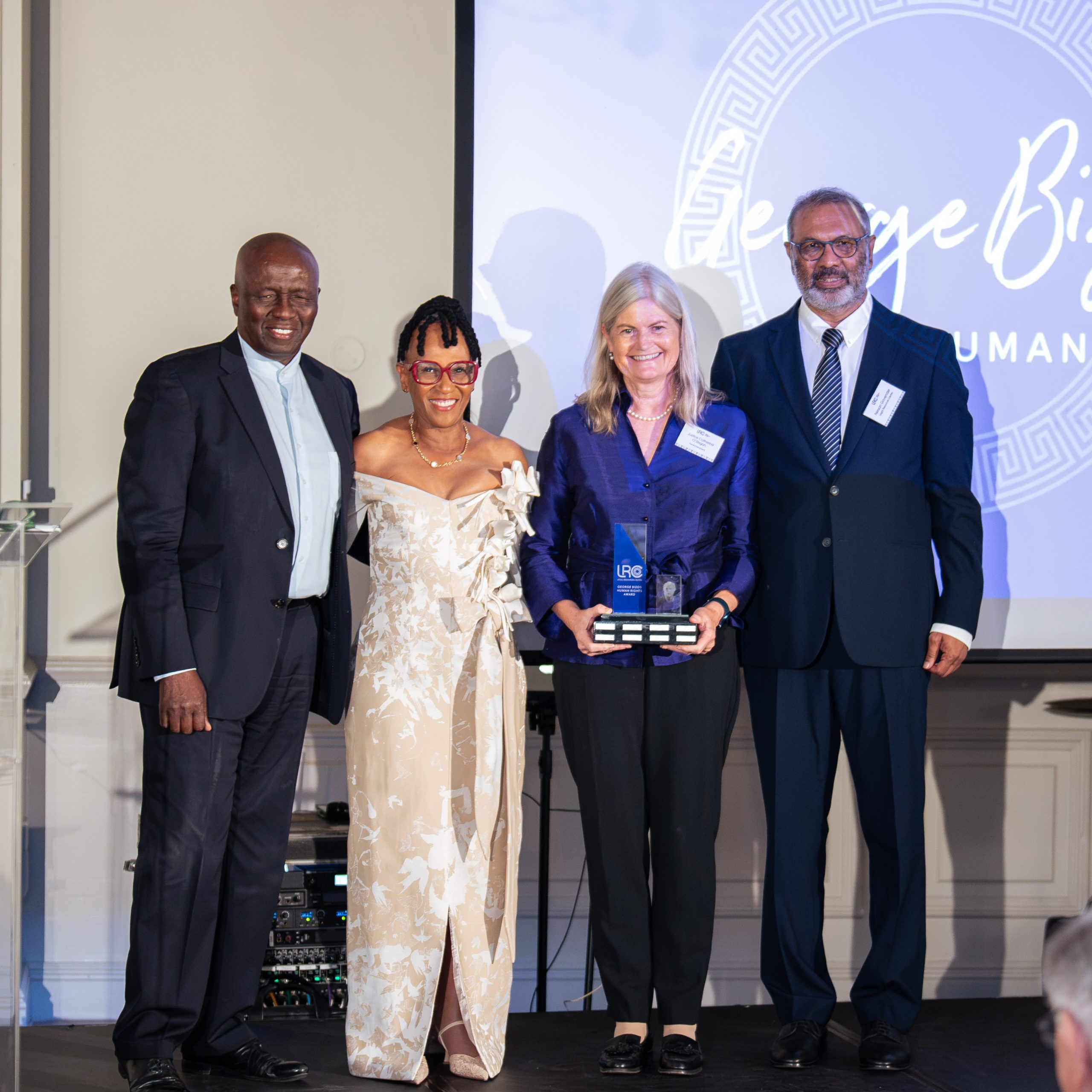
The Legal Resources Centre (LRC) presented Justice Catherine O’Regan with the fifth George Bizos Human Rights Award in Johannesburg on 15 October 2026. The award recognises individuals whose work advances human rights and reflects the commitment to freedom, equality and democracy that characterised Bizos’s life.
Named in honour of Advocate George Bizos SC, the award celebrates a lawyer who used the law to challenge apartheid and seek accountability for abuses of power. A member of the Rivonia Trial defence team, Bizos represented Nelson Mandela and his fellow accused. He also supported families seeking answers about deaths in detention and represented victims of apartheid atrocities before the Truth and Reconciliation Commission. After joining the LRC in 1991, he continued working to secure constitutional rights, including representing families at the Marikana Commission of Inquiry.
His legacy extends beyond prominent cases. It lives in the care and respect he showed ordinary people seeking legal help, and in the generations of lawyers he mentored. The award honours this commitment to placing the law at the service of people whose rights have been denied.
Previous recipients are George Bizos himself, former Deputy Chief Justice Dikgang Moseneke, the late Justice Yvonne Mokgoro and Advocate Geoff Budlender SC.
Justice O’Regan received the award in recognition of her contribution to constitutionalism, equality and human rights in South Africa and internationally. Before joining the Constitutional Court, she represented emerging trade unions and communities facing eviction under apartheid land laws. As a member of the Court’s founding bench from 1994 to 2009, she helped shape South Africa’s constitutional jurisprudence and the protection of fundamental rights.
Her work has also included service as an ad hoc judge of Namibia’s Supreme Court and as the founding Director of the Bonavero Institute of Human Rights at the University of Oxford. Across these roles, she has contributed to strengthening the rule of law and developing future generations of human rights lawyers.
In her acceptance address, Justice O’Regan examined why public interest law organisations matter amid growing inequality and pressure on democracy. She contrasted the democratic transitions of the late twentieth century with the rise of authoritarian populism, warning that no democracy can assume it is safe.
She described attacks on journalists, courts, electoral bodies, universities and civil society, and the concentration of executive power, as methods of weakening democracy. She also considered how poverty and inequality fuel public anger and frustration.
Her address identified three areas for resisting democratic decline: effective democratic politics, protection of free and fair elections, and the rule of law. She stressed that the rule of law depends on everyday practice, including access to courts, impartial decisions and compliance with court orders.
She highlighted how the LRC and other public interest lawyers help people obtain legal representation, bring strategic cases to protect constitutional rights, and train young lawyers committed to ethical practice.
Her closing words underlined the continuing responsibility to protect democratic gains: “The Struggle continues, victory is never permanent.”